Kitten Play and Behavior
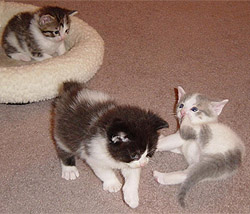
When cats play, they incorporate a variety of behaviors into their play. Aggressive play behavior is particularly common in young cats and in cats that live in one-cat households. Play provides young cats with opportunities to practice skills they would normally need for survival, such as pouncing, stalking, biting, scratching, and clawing. If humans play with a young kitten using their hands and/or feet instead of toys, the kitten is liable to learn that practicing these skills while playing with people is okay. In most cases, it is possible to teach your kitten or young adult cat that rough play is not acceptable behavior.
Since young cats and kittens need a lot of playtime, it is important to set up three or four consistent times during the day to initiate play with your cat. This helps her understand that she is not the one responsible for initiating play. This also helps to avoid unwanted pouncing at inappropriate or inconvenient times.
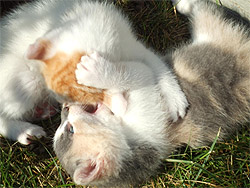
One way kittens play is by grabbing each other with both front feet, biting each other and kicking with their back feet. This is also a way kittens try to play with hands and feet if being waved in front of them. It is very important to avoid using any part of your body, like fingers or toes. Redirect your cat's aggressive play behavior onto acceptable objects like toys. It may take some trial and error to find the toy that works best with your kitten so make sure you try a variety.
Often, discouraging unacceptable behavior is the only avenue that is available. You need to set the rules for your kitten's behavior and your family and friends should reinforce these rules. Your kitten can't be expected to learn to differentiate between people in terms of when it's okay for rough play and when it is not.
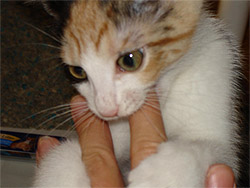
- Use aversion techniques to discourage your kitten from nipping or biting. You can either use a squirt bottle filled with water or a can of pressurized air to squirt your kitten when she becomes rough. To use this technique effectively, you always need to have the spray bottle or can handy. Remember that aversion techniques only works if you offer your kitten an acceptable alternative.
- Redirect the behavior. After you startle your kitten with the air or water, IMMEDIATELY offer her a toy to wrestle with or to chase. This will encourage her to direct her rough play onto a toy instead of a person. It is recommended that you keep a stash of toys hidden in each room specifically for this purpose.
- Withdraw attention when your kitten starts to play too rough. If the distraction and redirection techniques don't seem to be working, the most drastic thing you can do to discourage your cat from rough play is to withdraw all attention. Since she wants to play with you, she is going to figure out how far she can go; however, you keep this limit consistent. The best way to withdraw your attention is to walk into another room and close the door long enough for her to calm down. If you pick her up to put her in another room, you're rewarding her by touching her. You should be the one to leave the room.
PLEASE NOTE: None of these methods are very effective unless you also give your kitten acceptable outlets for her energy. You need to play with her regularly using appropriate toys.

Punishing your kitten for rough play by tapping, flicking or hitting are almost always guaranteed to backfire. Your kitten could become afraid of your hands or she could interpret those flicks as playful moves and play more aggressively. Picking up your kitten to put her into a "timeout" could possibly reinforce her behavior because she probably would enjoy the physical contact of being picked up. By the time you get her to the timeout room and close the door, she has probably already forgotten what she did to be put in that situation.
If you find that none of these suggestions work and your kitten's play increases in aggression or becomes unpredictable, it can be best to seek help from a behavior specialist. Kittens can bite or scratch through the skin, and abuse by your cat is not conducive to a caring and mutually beneficial relationship.